There’s a moment most parents of children with ADHD know well.
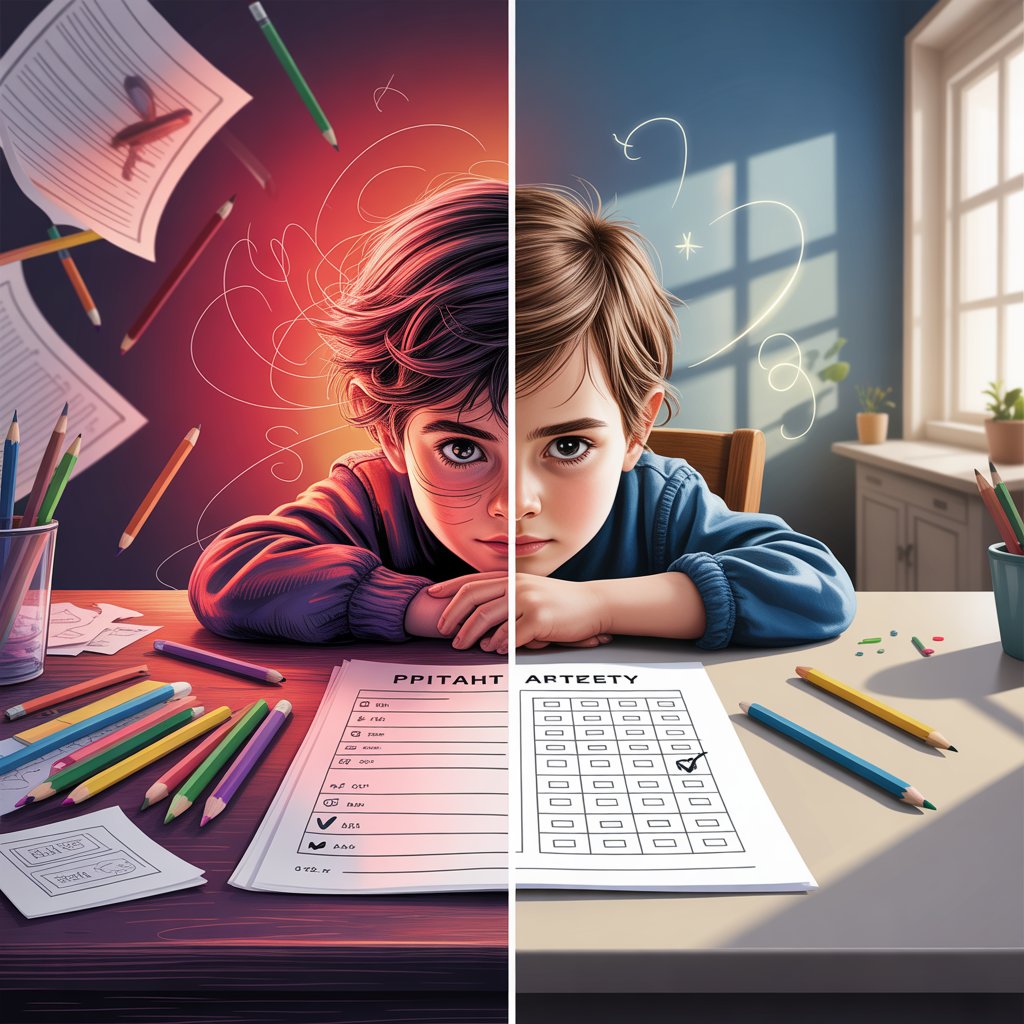
The pencil is on the table. The worksheet is untouched. Five minutes pass. Then ten. Frustration rises—not because the child can’t do it, but because starting feels like climbing a mountain with no trail.
That’s where a science-backed ADHD printable activity book for kids changes the story.
Not with louder instructions. Not with longer lectures.
But with design that works with the brain instead of against it.
This isn’t about keeping kids busy. It’s about building focus in a way that feels possible—repeatable—safe.
What Is an ADHD Printable Activity Book?
An ADHD printable activity book is a downloadable PDF workbook intentionally created for children with Attention-Deficit/Hyperactivity Disorder. It supports focus, executive function skills, impulse control, and emotional regulation through structured, brain-informed worksheets.
At first glance, it might look like a simple stack of pages.
But underneath the surface, the architecture is different:
- Clean layouts that reduce cognitive overload
- Micro-tasks that create quick wins
- Visual progress trackers that trigger dopamine reinforcement
- Emotional regulation tools woven into learning
Traditional activity books ask for sustained attention.
ADHD-friendly printables build sustained attention.
That difference changes everything.
Why So Many Activity Books Quietly Fail Kids With ADHD
It’s not laziness. It’s neurology.
Children with ADHD experience differences in:
- Dopamine regulation
- Prefrontal cortex activation
- Working memory bandwidth
- Task initiation circuitry
- Emotional regulation systems
Now imagine handing that brain a dense, colorful, overstimulating workbook page filled with long instructions and no clear endpoint.
Overwhelm happens fast.
And when overwhelm hits, the nervous system moves into resistance. Avoidance. Emotional spike. Shutdown.
Parents interpret it as defiance.
Children interpret it as failure.
The cycle repeats—until something different interrupts it.
The Brain Science Behind ADHD and Focus
If we’re going to talk about a science-backed ADHD printable activity book, we need to talk about dopamine.
Dopamine: The Motivation Molecule
Dopamine drives:
- Anticipation
- Motivation
- Reward tracking
- Persistence
In ADHD, dopamine regulation is inconsistent. That’s why tasks without immediate reward feel nearly impossible to start.
A well-designed ADHD printable activity book uses micro-wins to stimulate dopamine intentionally.
Small task.
Clear finish line.
Immediate mark of completion.
That’s not decoration. That’s neurochemistry.
And when dopamine increases, effort becomes more sustainable.
Executive Function: The Invisible Skill Set
Executive functions are the brain’s management system. They include:
- Working memory
- Planning
- Cognitive flexibility
- Self-monitoring
- Impulse control
- Task initiation
Many kids with ADHD don’t lack intelligence. They lack structured support for these executive skills.
A science-backed activity book hides executive training inside approachable exercises:
A sequencing game strengthens planning.
A timed focus sprint builds attention stamina.
A reflection page improves metacognition.
On paper, it looks simple.
In the brain, it’s skill acquisition.
What Makes an ADHD Printable Activity Book Truly Effective?
Plenty of worksheets exist online. Not all are helpful.
Here’s what separates noise from neurological design.
1. Cognitive Load Is Carefully Controlled
Effective ADHD printables use:
- Generous white space
- Simple, readable fonts
- Minimal visual clutter
- One clear instruction at a time
- One task per page
When visual chaos drops, mental clarity increases.
Children can finally aim their attention instead of fighting distraction.
2. Micro-Task Design That Reduces Resistance
Large assignments overwhelm working memory.
Short, contained activities—5 to 10 minutes—lower the emotional barrier to starting.
Starting becomes easier.
Completion becomes likely.
Confidence begins to compound.
This approach mirrors behavioral activation methods used in therapy for task paralysis.
It feels manageable because it is.
3. Emotional Regulation Is Built In—Not an Afterthought
Focus isn’t separate from emotion.
An ADHD-friendly printable system includes:
- Mood check-ins
- Calm-down worksheets
- Frustration scale trackers
- Breathing prompts
- Self-reflection pages
Regulation first.
Academics second.
When emotional intensity decreases, cognitive function improves.
4. Reward Systems That Reinforce Identity
Printable reward charts and progress trackers might look basic.
They’re not.
They activate anticipation pathways. Achievement loops. Competence reinforcement.
Over time, the internal narrative shifts from:
“I can’t focus.”
To:
“I finish what I start.”
That identity shift is powerful. And it matters long after the worksheet is done.
Inside a Science-Backed ADHD Printable Activity Book for Kids
When thoughtfully designed, the workbook becomes a structured developmental ecosystem.
Focus-Building Activities
- Timed concentration drills
- Pattern recognition challenges
- Visual scanning exercises
- Spot-the-difference tasks
These strengthen sustained attention in manageable bursts.
Executive Function Worksheets
- Task breakdown planners
- Goal-setting templates
- “Next Step” prompts
- Working memory recall games
They quietly build organization and follow-through.
Impulse Control Exercises
- Pause-and-plan scenarios
- Consequence mapping charts
- Stop–Think–Choose templates
Instead of punishing impulses, they train awareness.
Emotional Regulation Tools
- Feeling identification sheets
- Cognitive reframing prompts
- Mindfulness micro-practices
- Reflection logs
These pages stabilize the nervous system before academic stress escalates.
Together, these elements transform random activities into a cohesive skill-building strategy.
How to Use an ADHD Printable Activity Book at Home
Tools work best when paired with rhythm.
The 15-Minute Focus Sprint
- Choose one printable page.
- Set a visible timer for 5–10 minutes.
- Remove obvious distractions.
- Complete the page—nothing more.
- Mark progress immediately.
- Celebrate completion.
Stop there.
End on success. That’s the secret.
Consistency builds neural efficiency. Not marathon sessions.
When to Use It
Morning:
Quick success-based activities prime the brain for school.
After school:
Begin with emotional regulation pages before homework.
Transition the nervous system first. Academics follow more smoothly.
Printable Worksheets vs Apps for ADHD
Digital tools feel modern. Engaging. Fast.
But apps often overstimulate dopamine systems with constant novelty.
Printables offer:
- Reduced screen distraction
- Tactile learning
- Fewer competing stimuli
- Improved memory retention through handwriting
- Lower temptation to multitask
For many children with ADHD, paper creates grounding. It slows the pace just enough to regain control.
The Questions Parents Actually Ask
“Will this actually help my child focus?”
When designed around executive function principles and dopamine reinforcement loops, yes—printables can strengthen focus gradually and measurably.
Not instantly. Not magically. But reliably.
“What age is this best for?”
Most ADHD printable activity books support children between ages 5 and 12, though executive function frameworks benefit teens as well.
It’s less about age and more about developmental readiness.
“How often should we use it?”
Short daily sessions (5–15 minutes) outperform long, occasional sessions.
Momentum matters more than duration.
“Is this a replacement for therapy?”
No.
An ADHD printable workbook supports skill development, but it does not replace professional diagnosis, behavioral therapy, or medical guidance.
Think of it as scaffolding—not a substitute for care.
The Emotional Layer Most Guides Ignore
Children with ADHD often hear subtle messages:
“You need to try harder.”
“Why can’t you just focus?”
“Everyone else finished already.”
Over time, those messages attach to identity.
A structured ADHD printable activity book interrupts that narrative.
It creates controlled success experiences.
And success—small, repeatable success—rewires belief.
Focus improves because confidence improves.
Confidence improves because completion becomes achievable.
And that quiet shift changes more than grades.
Building a Sustainable Focus Ecosystem
The strongest results happen when printable tools align with predictable structure:
- Visual daily schedules
- Routine charts
- Consistent reward systems
- Parent implementation plans
- Executive function skill trackers
Structure lowers anxiety.
Predictability reduces friction.
Repetition deepens mastery.
Nothing dramatic. Just steady progress.
Signs It’s Working
You’ll notice subtle changes first:
- Tasks begin faster
- Fewer emotional spikes
- More completed pages
- Increased willingness to attempt new challenges
These shifts signal nervous system stability and strengthening executive function pathways.
Growth is incremental.
But it compounds.
Products / Tools / Resources
If you’re exploring a science-backed ADHD printable activity book for kids, here are supportive tools that naturally complement the system:
- ADHD Printable Activity Book PDF (Focus + Executive Function Bundle) – Look for versions with emotional regulation pages and progress trackers.
- Visual Schedule Printables – Reinforce daily structure alongside workbook use.
- Dry-Erase Sleeves – Allow repeated use of printed worksheets without reprinting.
- Children’s Focus Timers (Visual Countdown Timers) – Helpful for the 5–10 minute sprint method.
- Executive Function Skill Trackers – Progress charts designed specifically for working memory and task initiation.
- Calm-Down Corner Printables – Breathing prompts, feeling charts, and sensory reset guides.
Choose tools that feel simple, repeatable, and sustainable. The goal isn’t intensity. It’s rhythm.
And rhythm is where focus begins.








0 Comments